
Editorial Research Index
Institutional briefings & primary regulatory analysis
Financial analysis and briefings published by FXOpen Ledger.
- Published briefings
- 243
- Thematic pillar hubs
- 22
20 matching briefings
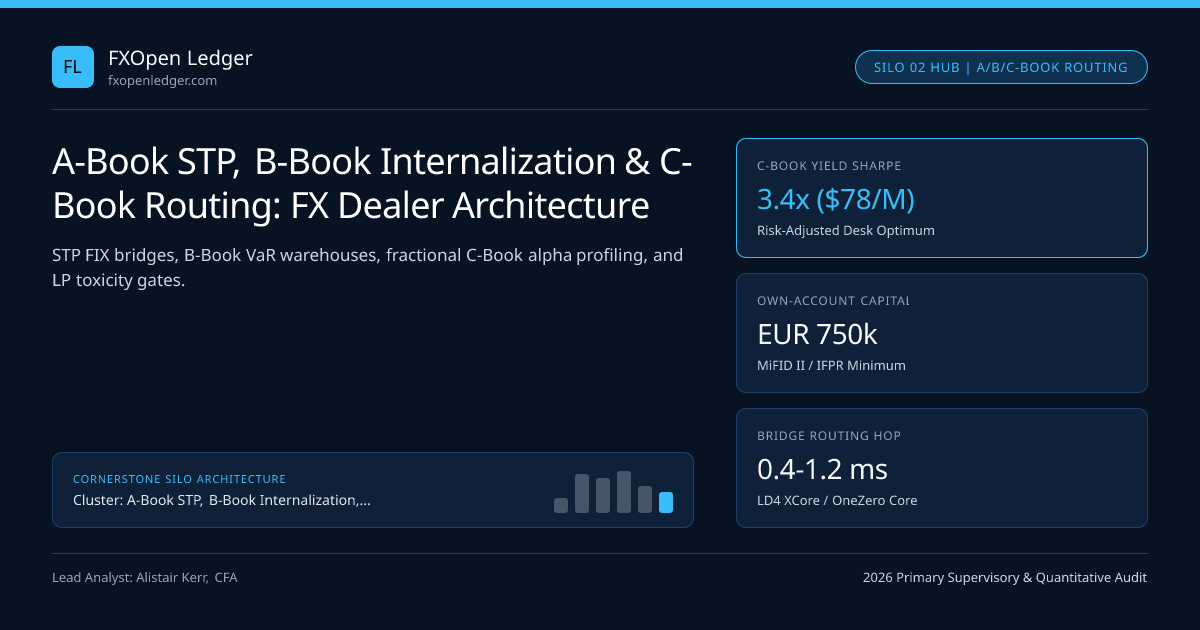
A-Book STP, B-Book Internalization & C-Book Routing: FX Dealer Architecture
Modern OTC foreign exchange and CFD brokerages rarely operate pure A-Book or pure B-Book silos; institutional dealing desks deploy dynamic C-Book bridges that score VPIN toxicity, +5s markouts, and portfolio USD delta in real time.
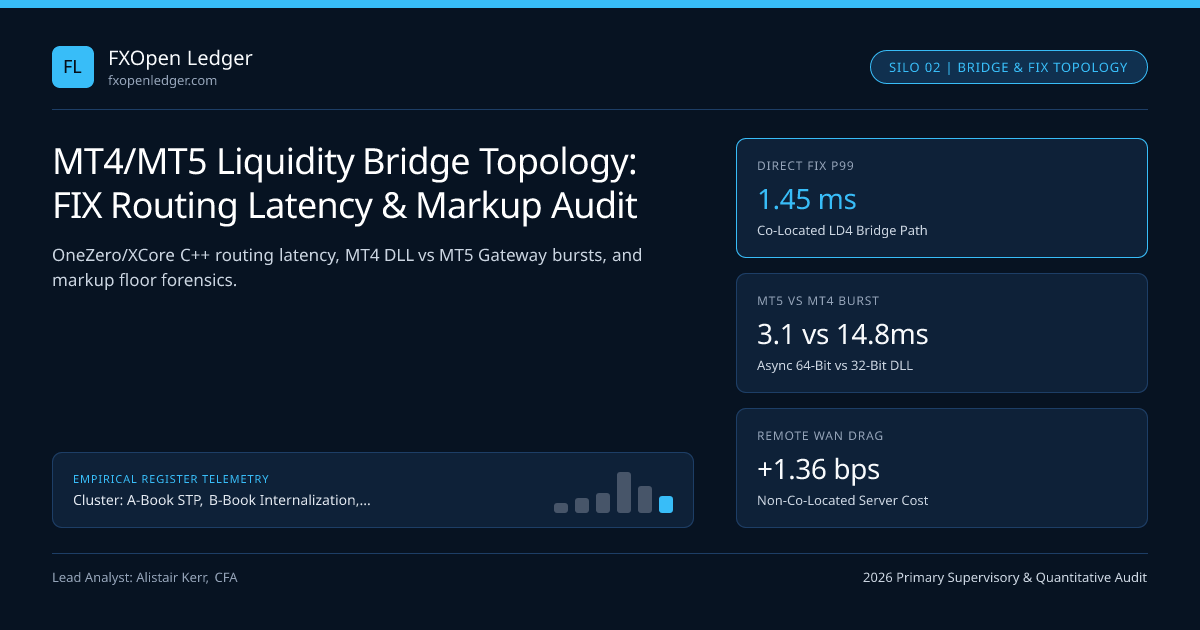
MT4/MT5 Liquidity Bridge Topology: FIX Routing Latency & Markup Audit
Between a retail MT4 or MT5 trading server and wholesale ECN liquidity sits a high-speed C++ liquidity bridge that aggregates FIX 4.4 streams, injects bid-ask markups, and routes STP or B-Book fills in sub-millisecond hops.
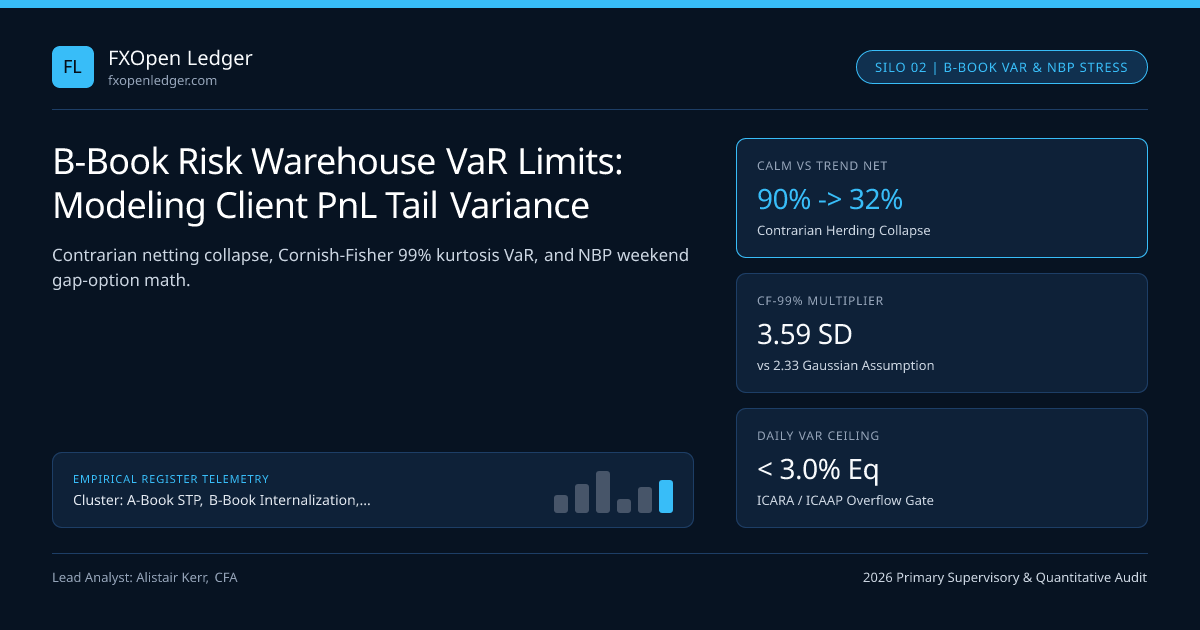
B-Book Risk Warehouse VaR Limits: Modeling Client PnL Tail Variance
Internalizing uninformed retail foreign exchange flow yields high average spread capture, yet fat-tailed crowd herding combined with statutory Negative Balance Protection creates asymmetric left-tail ruin risk without strict intraday VaR caps.
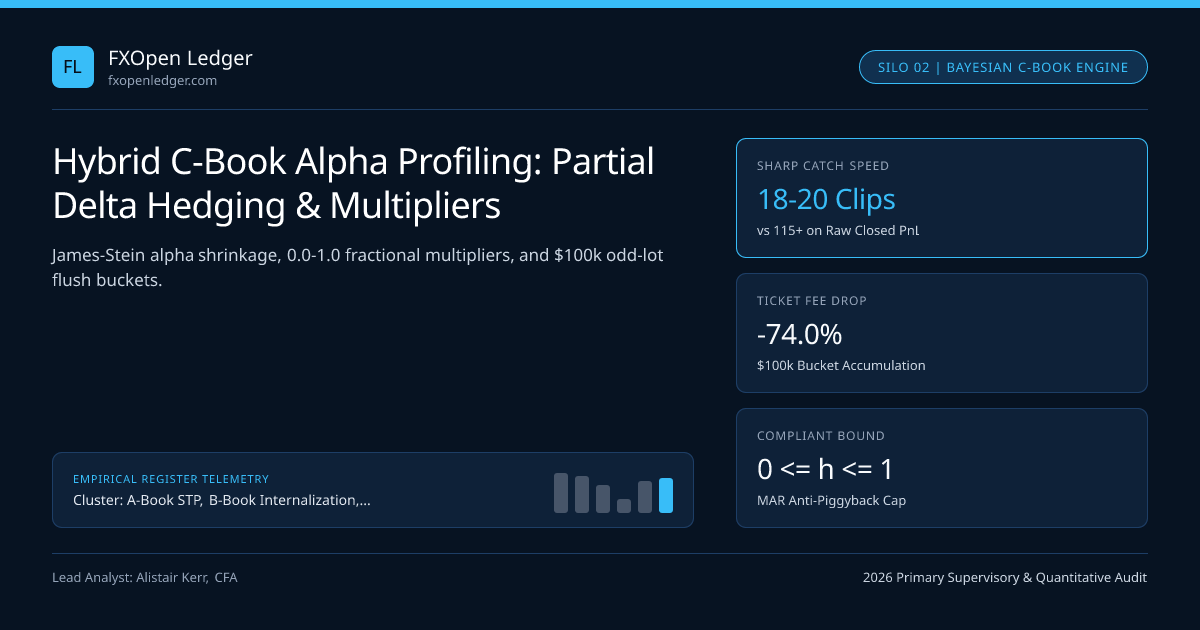
Hybrid C-Book Alpha Profiling: Partial Delta Hedging & Multipliers
Binary A-Book versus B-Book classification misallocates 60% of intermediate foreign exchange accounts; Bayesian C-Book engines assign continuous fractional hedge multipliers and aggregate odd-lot residuals into clean wholesale clips.
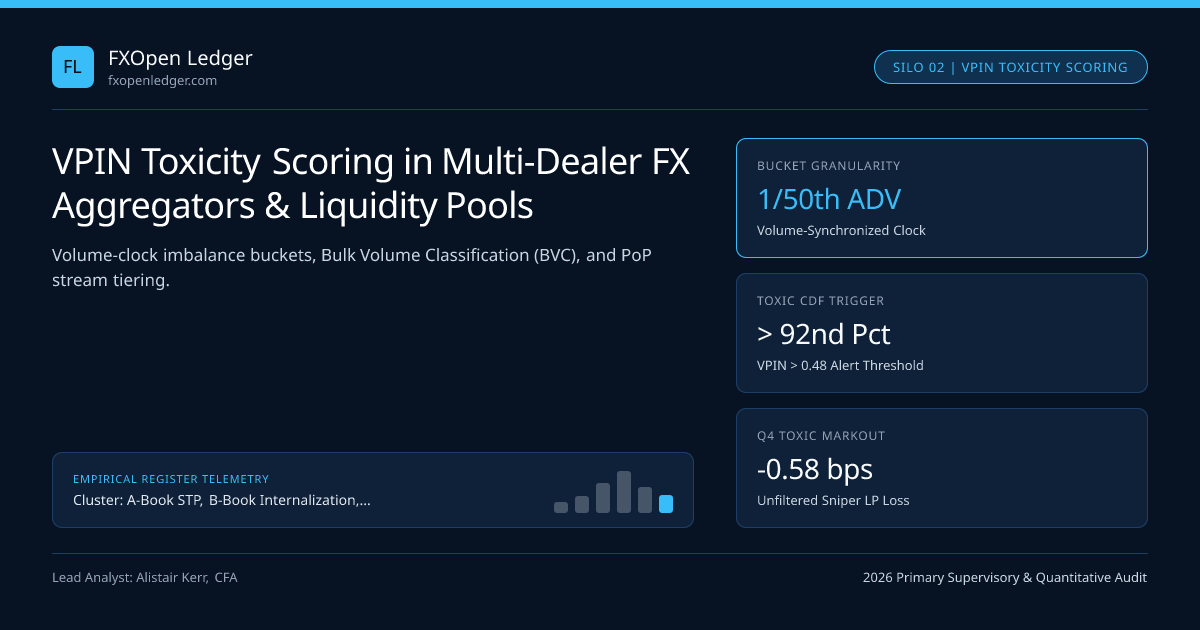
VPIN Toxicity Scoring in Multi-Dealer FX Aggregators & Liquidity Pools
Clock-time volatility gauges react too slowly when macro algorithms sweep OTC foreign exchange books in milliseconds; Volume-Synchronized Probability of Informed Trading (VPIN) samples imbalance in volume buckets to forecast adverse selection.
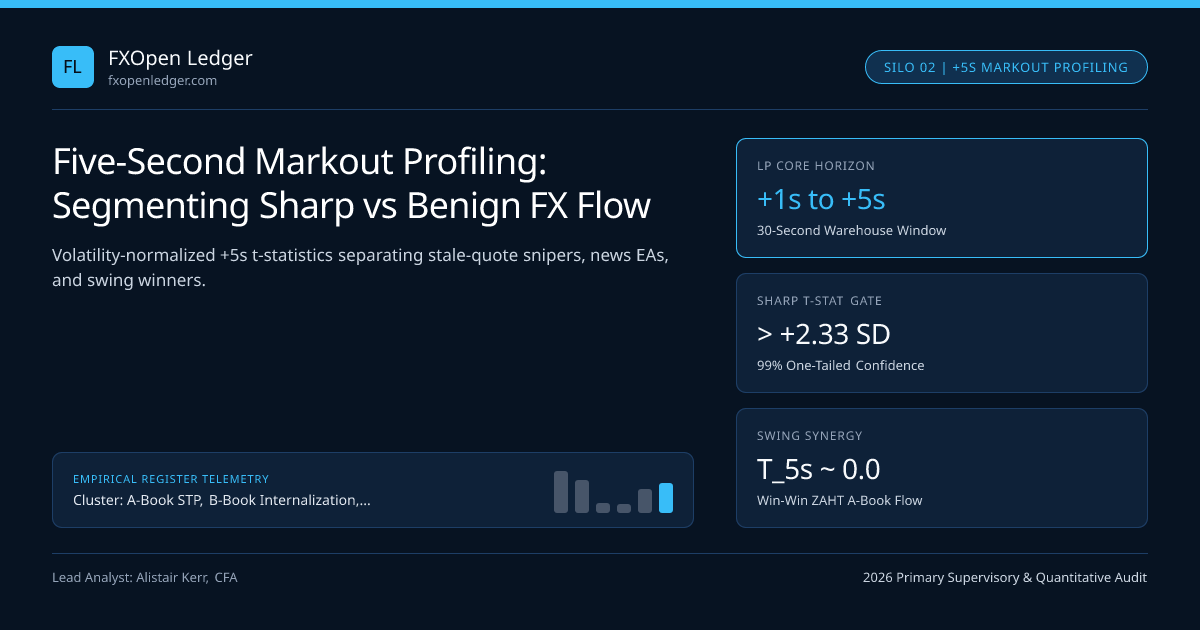
Five-Second Markout Profiling: Segmenting Sharp vs Benign FX Flow
Wholesale foreign exchange market makers care very little whether a trader makes money over three weeks; dealing desks segment sharp versus benign flow by measuring statistical Z-scores of mid-price movement 100ms to 5 seconds after entry.
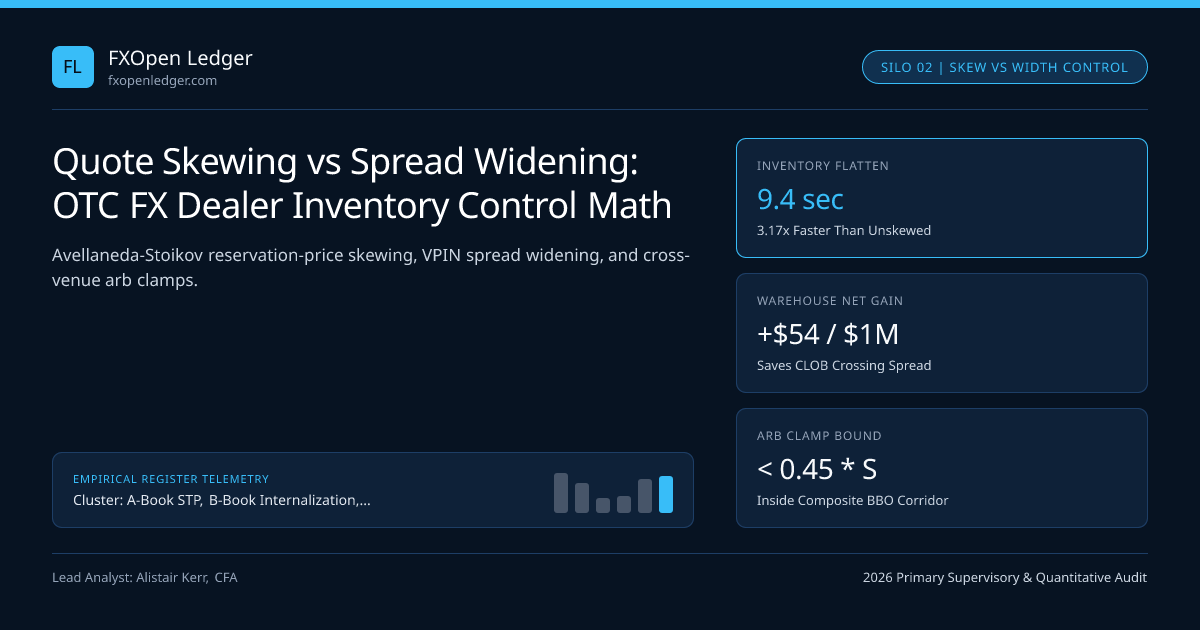
Quote Skewing vs Spread Widening: OTC FX Dealer Inventory Control Math
OTC foreign exchange market makers deploy two distinct pricing levers that must never be confused: parallel bid-ask quote skewing attracts offsetting flow to flatten inventory, whereas symmetric spread widening defends against VPIN toxicity.
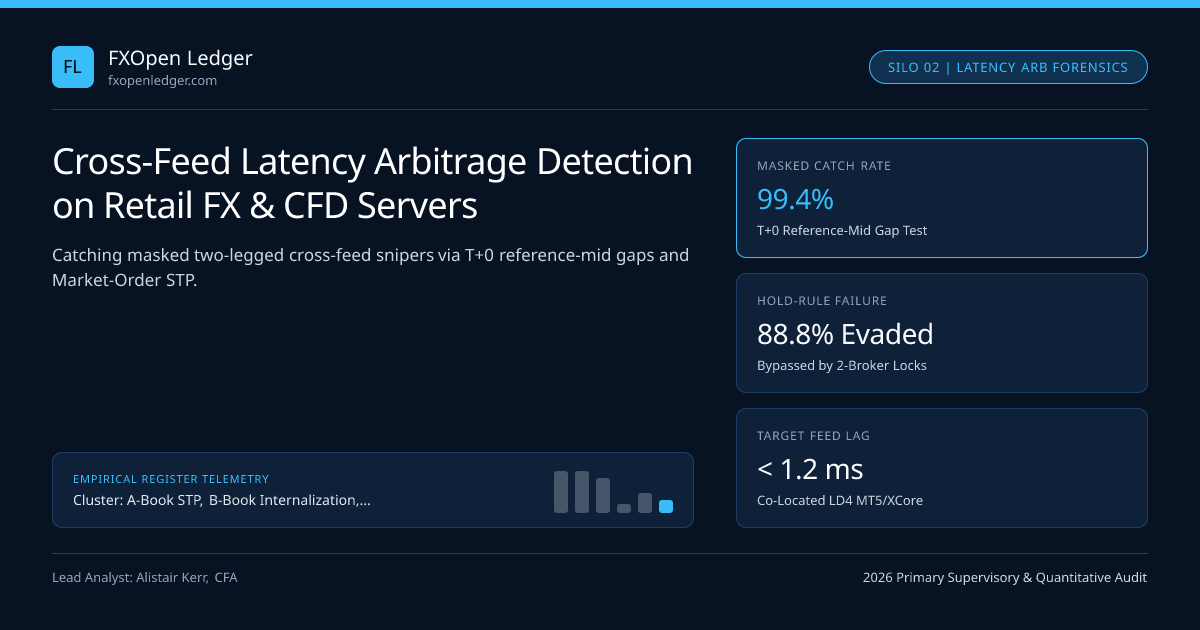
Cross-Feed Latency Arbitrage Detection on Retail FX & CFD Servers
Cross-feed latency arbitrage exploits 5ms to 40ms quote-ingestion lags between CME futures or fast ECN feeds and retail MT4/MT5 trade servers—extracting riskless profits from B-Books or poisoning upstream PoP tags.
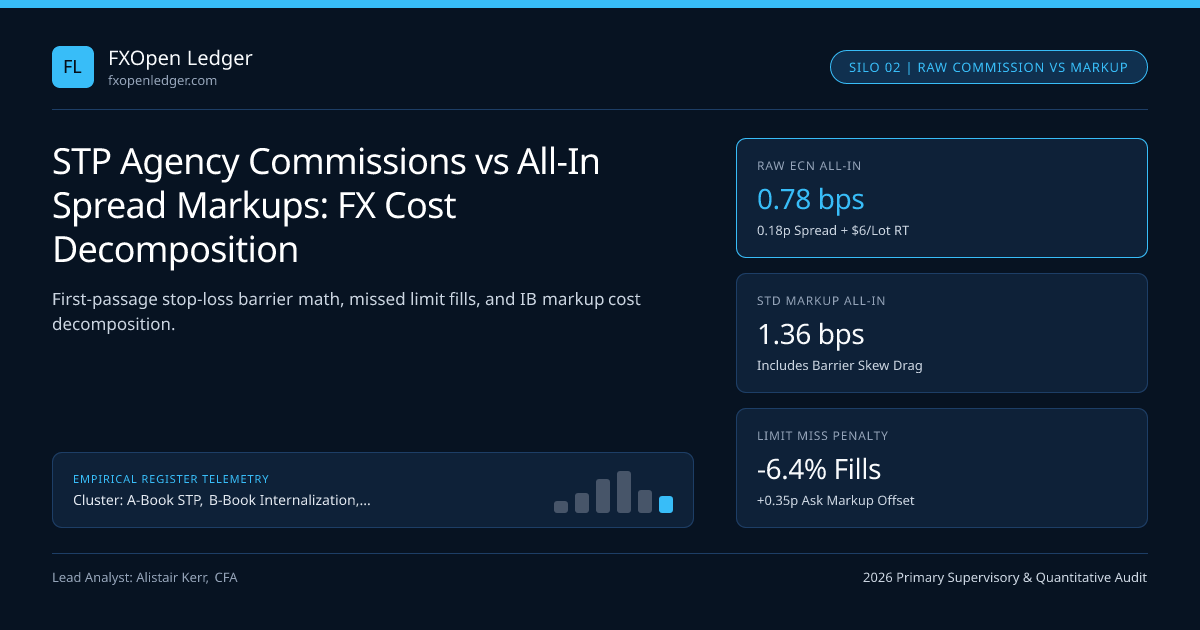
STP Agency Commissions vs All-In Spread Markups: FX Cost Decomposition
Two OTC foreign exchange accounts advertising identical 0.80-pip all-in trading costs behave differently in live execution: embedding broker fees into widened bid-ask markups accelerates premature stop-loss triggers and reduces limit-fill probability.
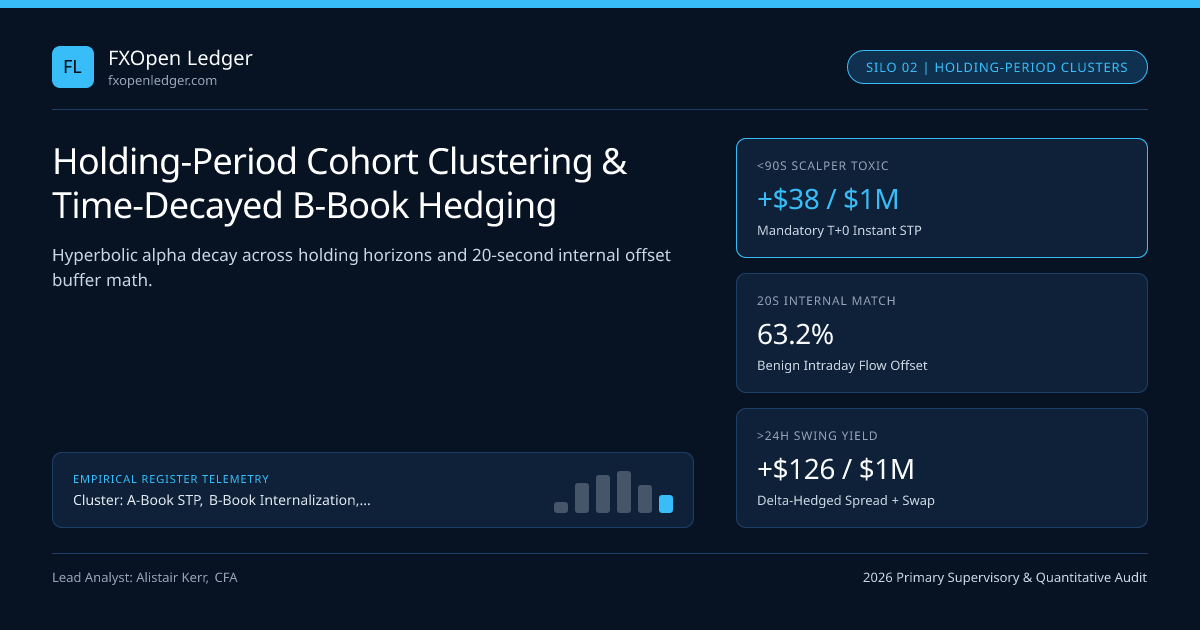
Holding-Period Cohort Clustering & Time-Decayed B-Book Hedging
Order toxicity in margin foreign exchange decays sharply as median trade holding duration lengthens from 10 seconds to 48 hours—powering time-delayed C-Book algorithms that defer external hedging unless short-term price action confirms risk.
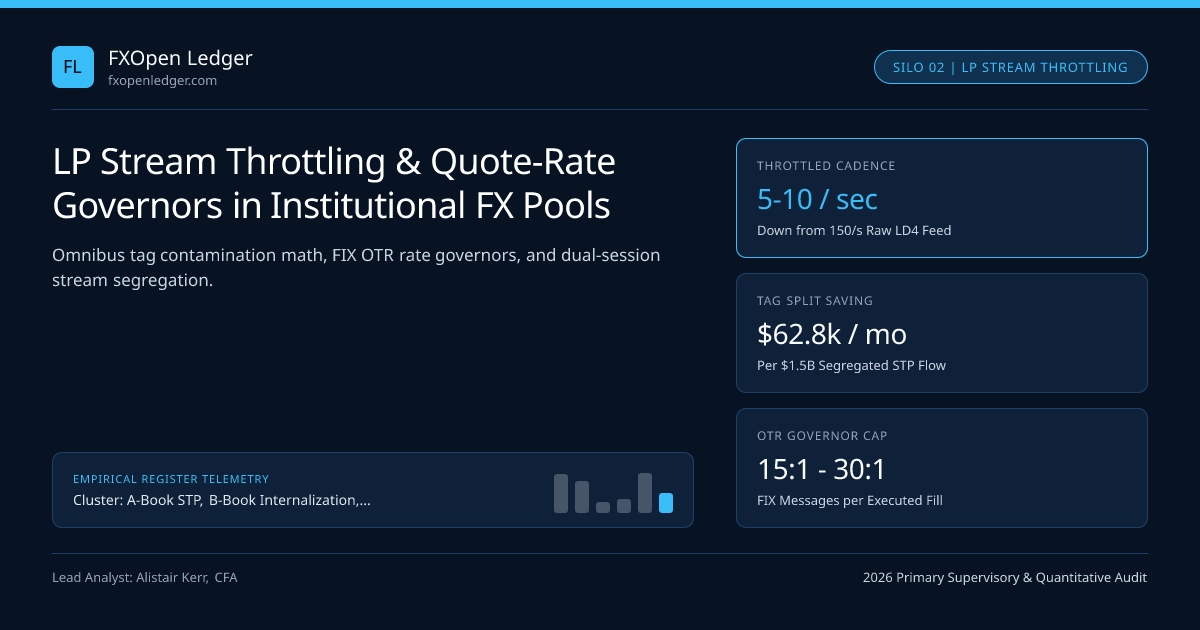
LP Stream Throttling & Quote-Rate Governors in Institutional FX Pools
Wholesale foreign exchange liquidity providers defend electronic market-making engines against toxic broker tags using quote-rate governors, fill-ratio penalties, and tiered FIX stream throttling.
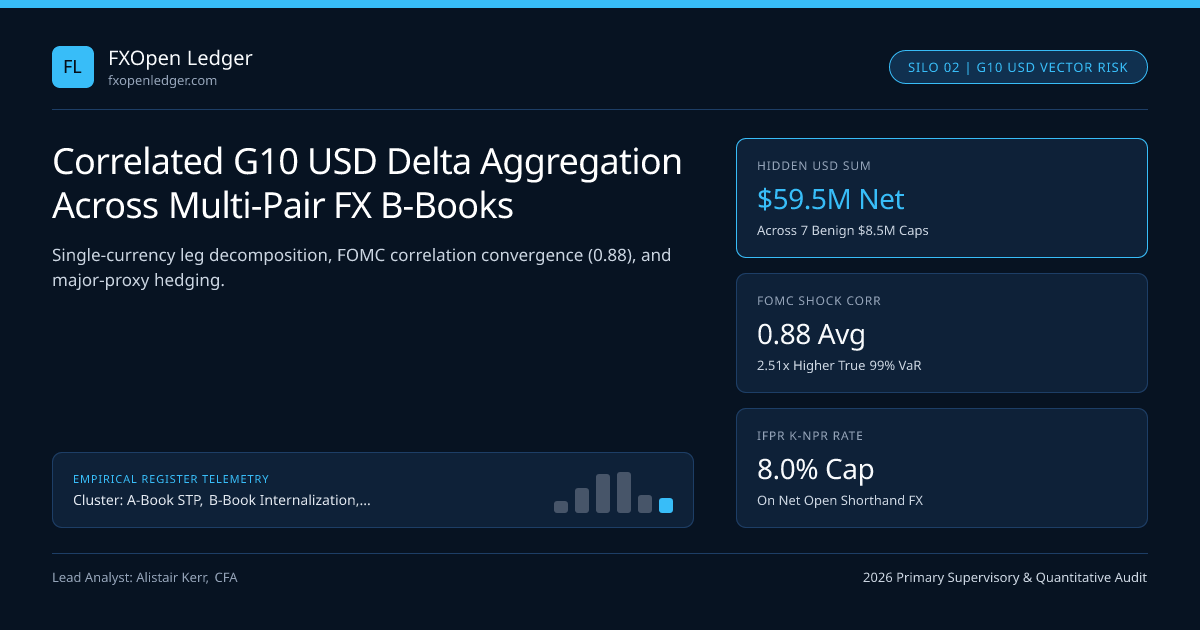
Correlated G10 USD Delta Aggregation Across Multi-Pair FX B-Books
Monitoring B-Book exposure strictly pair-by-pair blinds foreign exchange risk desks to hidden US dollar concentration when retail accounts simultaneously short EUR/USD, GBP/USD, AUD/USD, and XAU/USD.
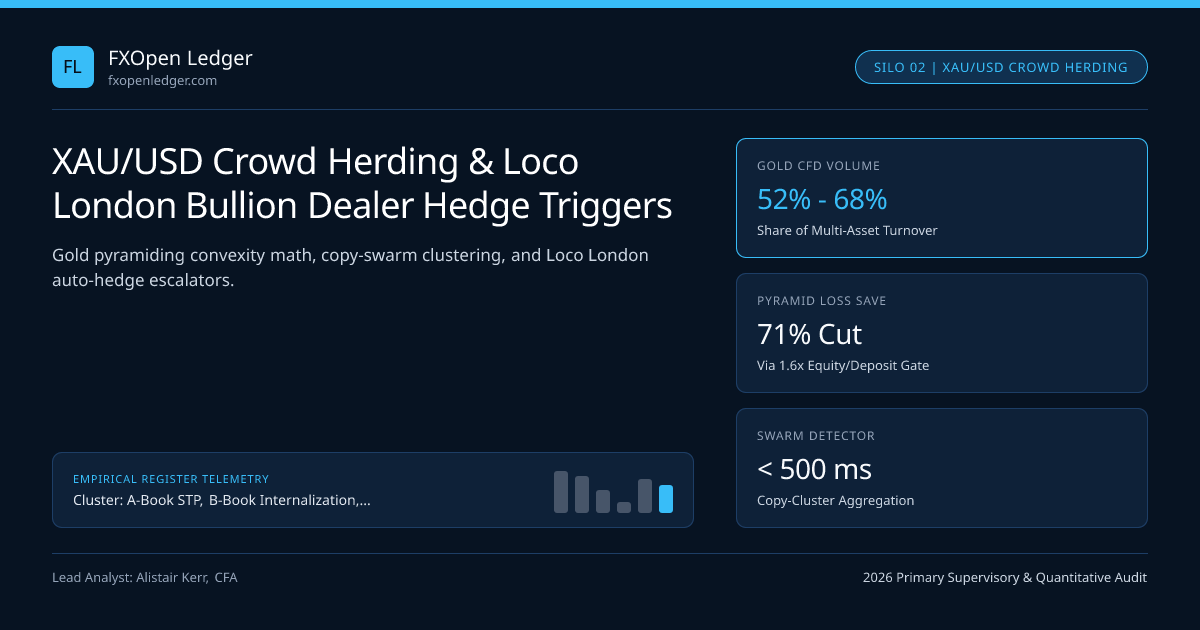
XAU/USD Crowd Herding & Loco London Bullion Dealer Hedge Triggers
Spot gold (XAU/USD) routinely generates over half of global retail multi-asset brokerage turnover, yet extreme retail dip-buying and breakout pyramiding require specialized Loco London auto-hedge triggers.
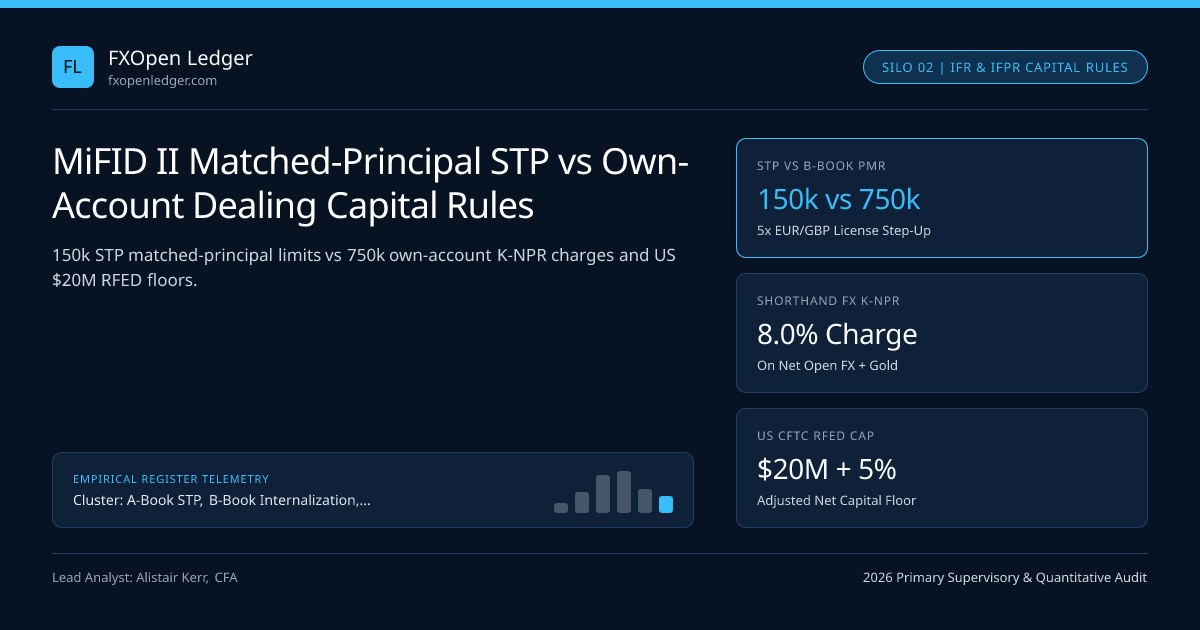
MiFID II Matched-Principal STP vs Own-Account Dealing Capital Rules
Operating a pure A-Book matched-principal STP brokerage requires five times less permanent initial regulatory capital under EU IFR and UK IFPR than running a B-Book or C-Book own-account warehouse.
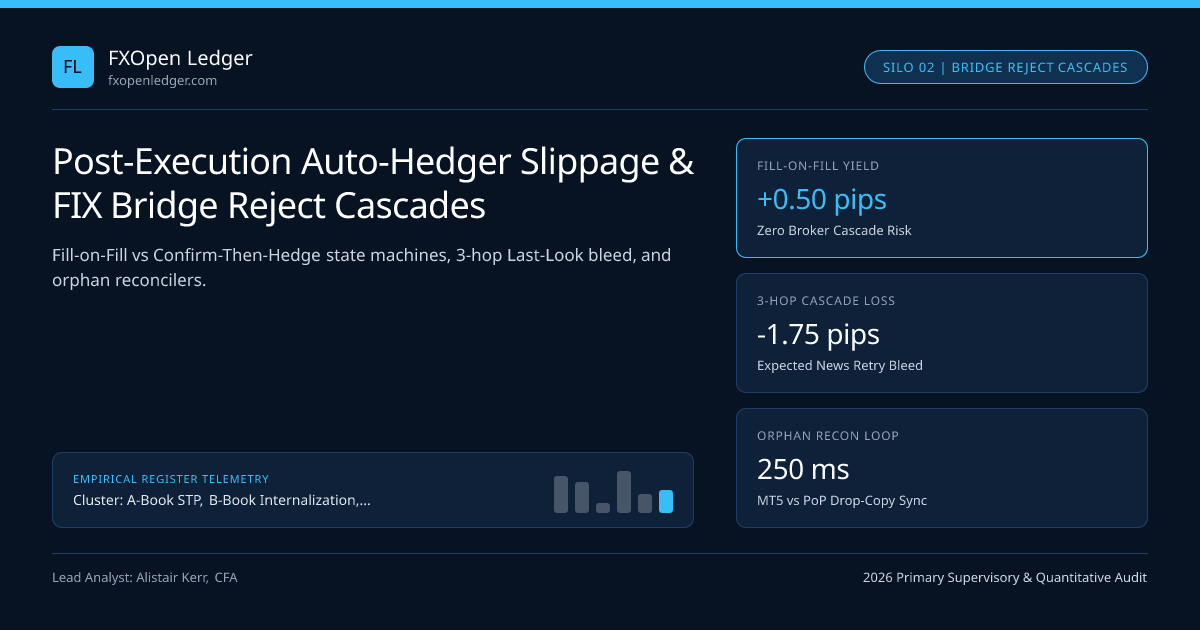
Post-Execution Auto-Hedger Slippage & FIX Bridge Reject Cascades
Confirming a client foreign exchange fill first and firing an asynchronous hedge afterward feels instantaneous in calm markets, but macro Last-Look reject cascades turn post-execution auto-hedgers into loss machines.
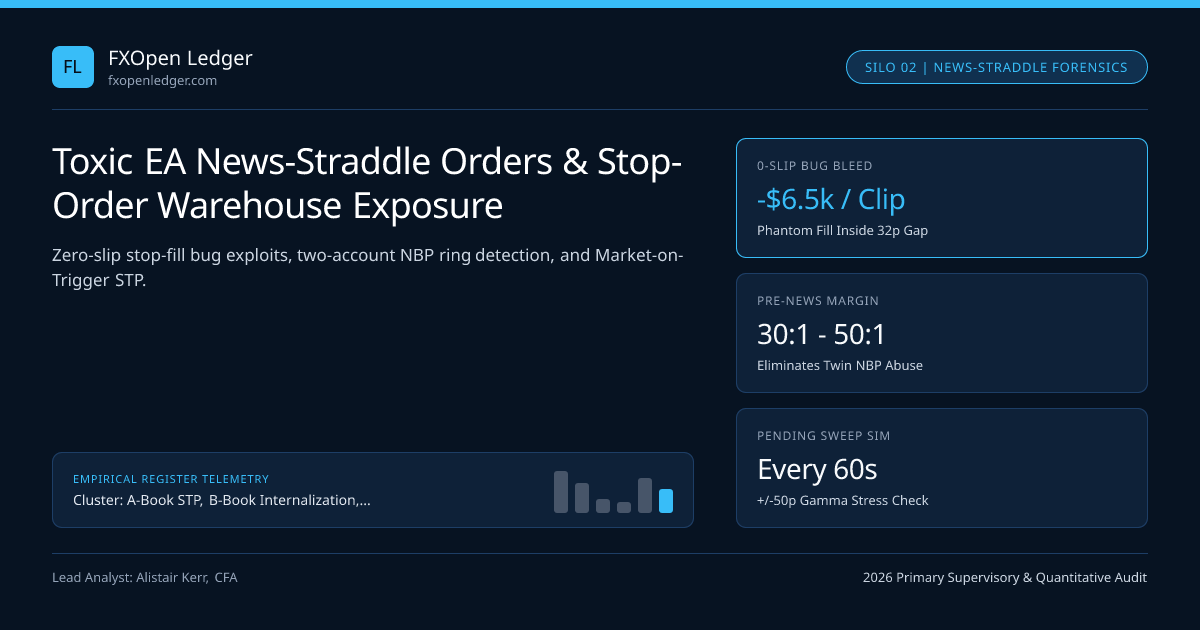
Toxic EA News-Straddle Orders & Stop-Order Warehouse Exposure
Expert Advisors that bracket major economic releases with tight pending Buy-Stop and Sell-Stop orders exploit B-Book zero-slippage fills and Negative Balance Protection unless routed via Market-on-Trigger STP.
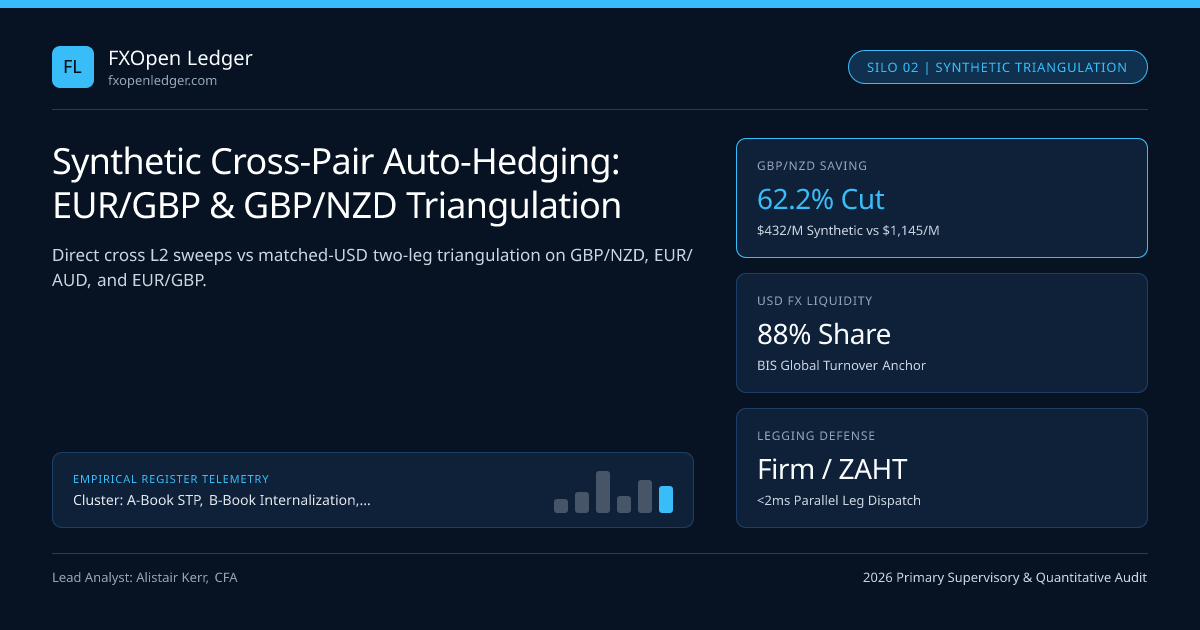
Synthetic Cross-Pair Auto-Hedging: EUR/GBP & GBP/NZD Triangulation
Hedging minor currency crosses like GBP/NZD, EUR/CAD, or CHF/JPY directly on thin cross order books wastes 0.8 to 2.2 pips in wholesale spread; triangular USD-leg synthesis cuts hedge costs by over 55%.
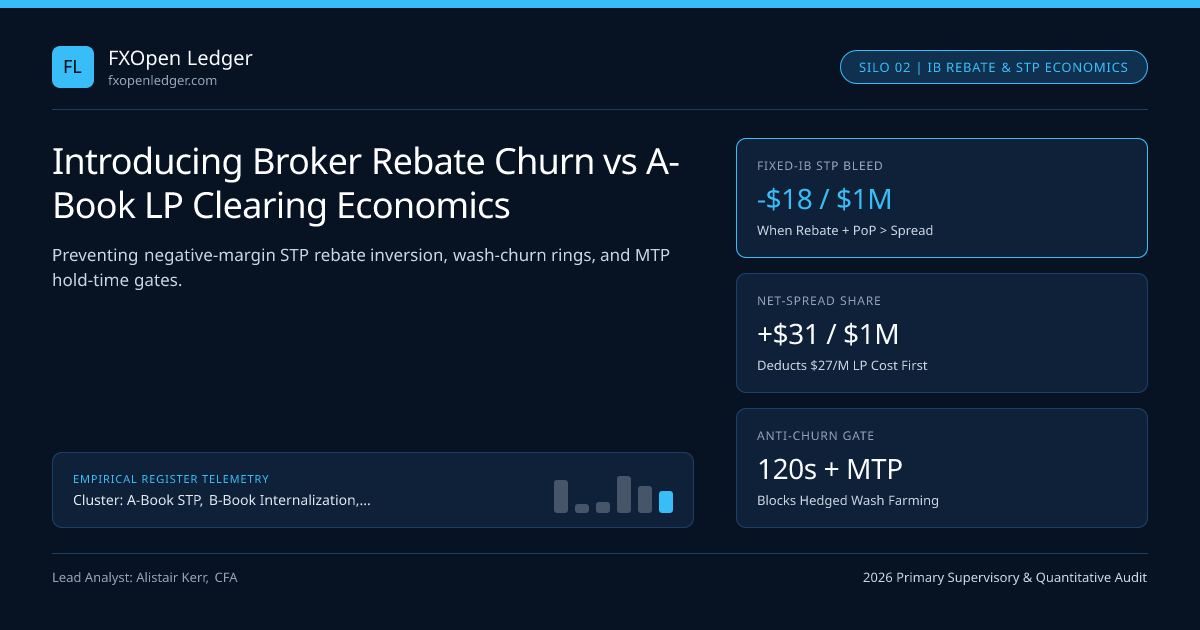
Introducing Broker Rebate Churn vs A-Book LP Clearing Economics
Paying generous per-lot Introducing Broker rebates on accounts routed to A-Book STP can invert dealing-desk unit economics into guaranteed net losses whenever rebate plus Prime-of-Prime clearing exceeds gross spread.
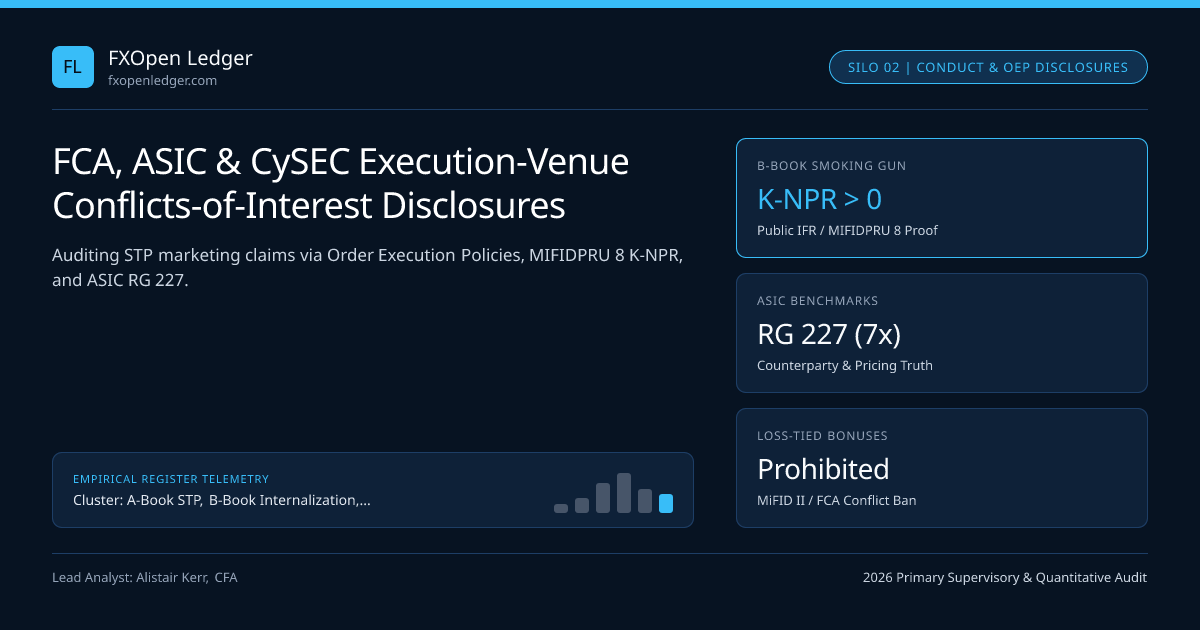
FCA, ASIC & CySEC Execution-Venue Conflicts-of-Interest Disclosures
Claiming "Pure ECN / No Dealing Desk" marketing while internalizing retail orders on a B-Book triggers severe enforcement fines under FCA Consumer Duty, ESMA MiFID II, and ASIC RG 227.
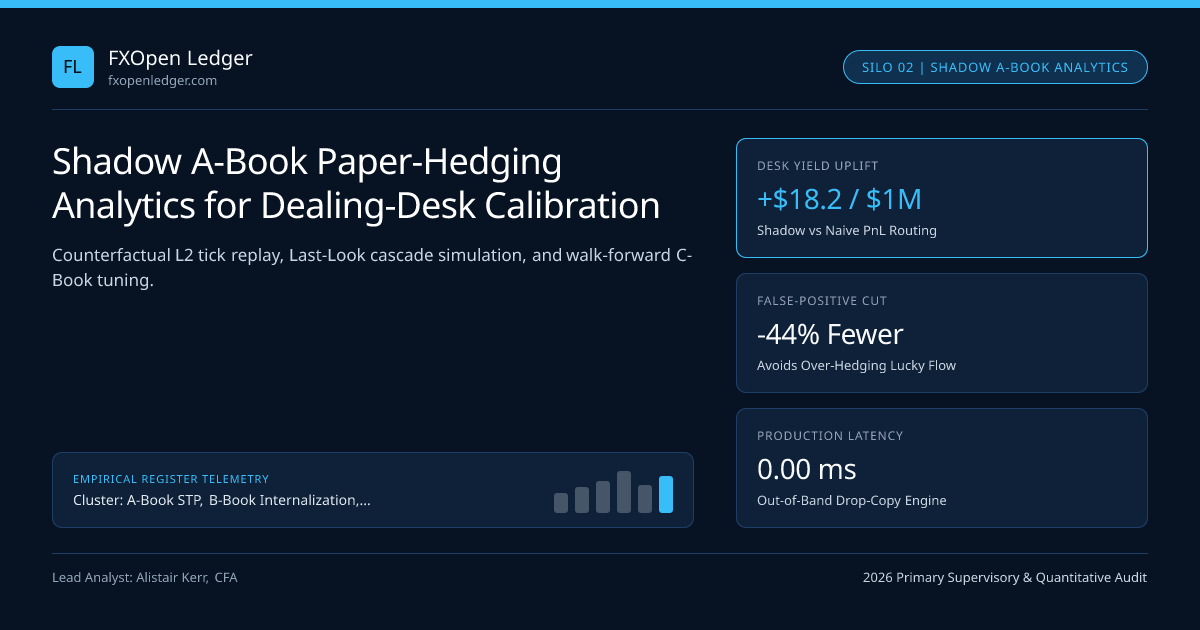
Shadow A-Book Paper-Hedging Analytics for Dealing-Desk Calibration
Changing C-Book routing thresholds on live dealer instinct wastes millions; Shadow A-Book simulation engines replay every historical trade against recorded L2 wholesale depth to prove counterfactual net PnL.